
In every transformation I have led, one principle stands above all others. Change is not driven by processes or technology. It is driven by people.
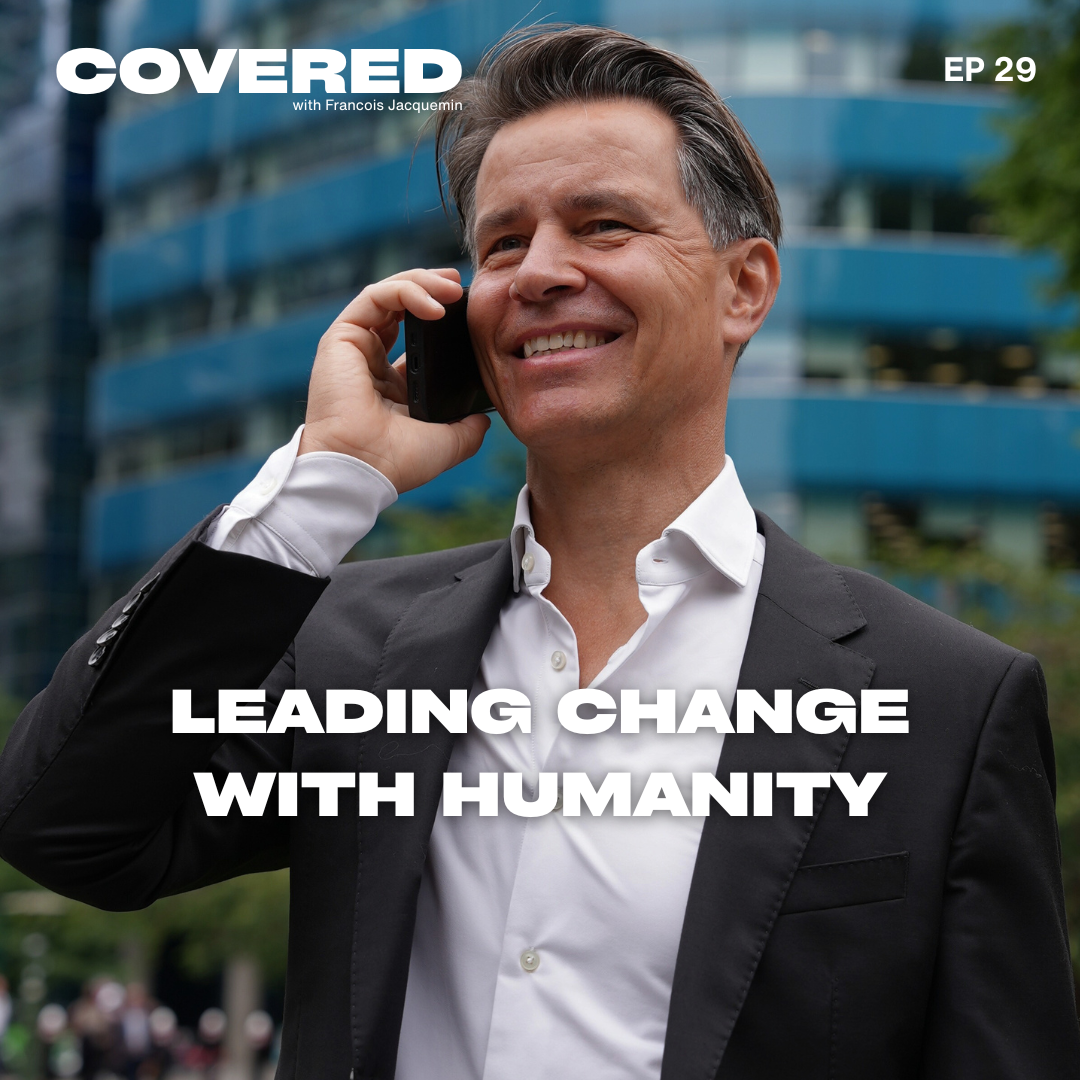
In this Episode:
Francois Jacquemin explains why trust is the foundation of effective transformation. He examines the human dynamics of change, the role of leadership in uncertainty, and how organisations improve performance when teams feel safe to adapt and contribute.
This is especially true in insurance and reinsurance, industries that exist because clients trust that we will be there when they need us most. Without trust, the entire system collapses. The same applies inside a company.
The value we create for clients does not originate from systems or products alone. Products only become meaningful when the people behind them design, distribute, and manage them with care and expertise. Even as discussions today centre on data, artificial intelligence, efficiency, or automation, these tools rely entirely on the judgment and integrity of the people who use them. Performance comes from teams, not technology.
In my experience, organisations that perform consistently well share a common trait. Their teams trust each other through the entire value chain. Every person must believe that the next colleague has done the work needed to allow them to perform. This removes fear, increases efficiency, and improves the client experience. Trust is not a soft concept. It is operational.
The same truth appears when organisations move through change. Change creates emotional pressure. Even those who say they welcome innovation often resist when transformation becomes concrete. The fear of uncertainty is a powerful force. Leaders must recognise that transformation is never only structural. It is emotional.
I have lived this many times, especially during mergers. I remember receiving guidance from a mentor who told me one sentence that shaped my approach. It will be okay. He did not focus on the process or the risk. He focused on the human need for reassurance. This message allowed me to connect with both sides of the organisation, including teams who were being integrated and were understandably concerned about the future. When people feel that the situation will be manageable and that they will be supported, they engage rather than withdraw.
No merger or transformation is perfect. I have spoken about this openly in conferences, including in Prague, where I shared both what worked and what did not. Real integration is iterative. Leaders must review their decisions daily, question what could be improved, and adapt quickly. Certainty about the goal is essential. Certainty about every step is unrealistic. Circumstances evolve. Plans must evolve with them.
Adaptation cannot be done in isolation. Leaders who impose change from above without creating space for contribution reduce both speed and quality. People support what they help build. When teams can influence their own transformation, execution accelerates and outcomes improve. This is true whether the change affects clients, internal operations, or an entire ecosystem of partners.
Town halls, structured exchanges, and empowered working groups are useful mechanisms to create alignment, but their effectiveness depends on the environment in which they take place. When people feel safe to express what works, what does not, and what must be challenged, trust grows. When trust grows, progress accelerates.
The human dimension is not a secondary consideration in transformation. It is the primary driver. The more organisations accept this, the stronger and faster their execution becomes. Trust is not simply a value. It is a strategic asset.
Timecode:
00:00 Introduction: Leading Change with a Human Touch
00:09 The Importance of People in Business
02:55 Trust: The Foundation of Insurance
03:57 Embracing Change and Overcoming Fear
05:05 Positive Client Outcomes Through Change
05:26 Personal Experiences with Change
07:14 Iterative Improvement and Adaptation
08:21 The Human Element in Implementing Change
Francois Links:
Apple Podcast
Transcript:
How do I lead change and promote change without losing the human touch? It's a good question, but, uh, the most important element human in here, the business I'm in, is people business. The, the, the, the value. Of what we, we provide to our clients, uh, of course is, is the capital behind the insurance company or the, the, the entity but the, the product themselves.
But those products are nothing without the people that are there to, um, to create them, to promote them, to manage them, and, and to make sure everything is is running. We talk about ai. We talk about, um, data, um, we talk about, uh, all the information that we receive and sometimes paperwork or efficiency. But at the end of the day, all those elements, they are driven by the people, by, by, by the brain power of the team that's behind the scene.
And, um, a, these, these companies that have been leading our, I was part of, or small part, sometimes a big part, sometimes, um. They all have this in common that the people inside are the ones responsible for the, the, the positiveness of the, of the outcome for the client and the experience for the client. So it's always about working together and delivering something, uh, which is positive.
It's not about, uh, having one star or two stars or three stars. It's about having the ability to bring the people working together in, in a way which is. Um, optimal, which, um, seems seamless and simple for a client and that has this emotional creation. Involved. What am I getting at? Is, um, for, for a team to work well together, they don't have to, we don't have to like each other, but we have to be able to have an, an open space, a trust space so that we can say what works, what doesn't work without being, uh, conflictual can lead to conflict.
It can lead to, to, to, to solution is better. Uh, usually it leads to conflict than we build and then we have the solution. But, um. There has to be a, a certain level of trust between the people, uh, so that we can build that solution, or we need trust that, uh, the, the, the person in, in, in, in both in the value chain will have done his job so that the, the, the next person will have the, uh, the.
The ability to perform correctly without being in fear of mistakes or that something's missing, and, um, therefore that creates efficiency and therefore it creates a better experience to the client. The other element of trust here is that, um, especially in in insurance, what is the basis of insurance?
Simply trust without trust. Why would anyone in their own mind give money to somebody else in the whole? That, that somebody will be there next year or the year after, or the year after to give money back in case there is a, a problem, could be a problem with a car, it could be a problem I have, could be the pension.
So there has to be a, you know, a very, very strong element of trust. But that there is, um, in the relationship between a client, the distributor, the insurer, and whoever. Part of that, uh, offering is that there is sufficient trust. That the delivery will happen at the time when, uh, the need is there. So the, the human element here is, is, is so important.
The emotional element, uh, linked to trust is, is so important that it has to be, um, in ground into the business. In case of change, of course, um, the emotions are exacerbated. It's, it's, it's very clear that. Humans are always afraid of change. It's very nice to wake up in the morning and think, oh, there is be, you know, there's some cer, some level of certainty in, in everything, which is going to happen today.
Some, some individual like change, I like change, um, but to a certain level, some more, some, some, some less. I guess everybody. When speaking theoretically is speaking about being willing to change things, but at the time where the concrete change happens, the fear is so strong that there is resistance. So from our perspective, we cannot change and transform and promote.
Improvement into a, into a company or into an ecosystem or into a, a, a larger, um, part of the value chain or partnerships or client base without having a human touch in mind when it's happening. First, if you change something for the client, then we need to be sure that it creates a positive outcome. We don't change something to upset the client, otherwise clients will go away.
So if you change something, you need to be able to understand what the client wants. And have tested it so that the outcome of the change will have positive impact, uh, on the client side. And, and usually that's pretty much human and emotional based when there is a change inside the company, going through a merger, for instance, uh, when it happens, I, I was, I was well placed because I moved from company to company in, in, in the past.
And I, and I, and I connected. To the employees of the company I was leading and the company which we acquired with my experience in the past, having had to move from one place to the place, not on my decision, but because the, the shareholder decided to, to, to make change in the structure of the group. So this changing changes happen.
And at the time I remember that, uh, my, my mentor, uh, which was very far away, was in, in, uh, in Rotterdam. And I was in Luxembourg. He said, Francois, the only thing that you need to be sure of it will be okay. That's what he said. He didn't care about the change, telling me You're gonna get a carried. So, you know, it's just like, forget about all the fear that you have.
It will be okay. Simply it's a different difficult moment in time. And, um, be open, accept it, and then try to see, uh, and work towards the, the, the better outcome. And the more you take in your own hands, the better it is, uh, for the future. And that, that's how I try to rally the teams together by, by creating this, okay.
It'll be okay. Moment. For a, um, a, a positive integration. Was everything perfect do mean? No, I mean, you know, it certainly not, uh, I, I was speaking in the conference in Prague a couple of years ago where I just gave the feedback on, on, on what worked and didn't work on, on, on the merger. And, and, and of course it's, it is, it is never perfect.
And, and it was far from it. It's always about iteration. It's always about, uh, creating a, a next step, you know, oh, that didn't work. What can I do to improve going back home every day thinking, how was I right? Was I wrong? Or how can I improve? You know, that that was something I had a lot. Um, you know, not always be sure of everything.
Of course, we have to be sure about the goal, but the steps in between, uh, sometimes they need to be adopted because things are changing. Situation change. Therefore, adaptation is. Not an option. It's required simply because the plan decided at the beginning will not work anymore due to circumstances and therefore those elements, if you decide on your own, it's not gonna work.
What, what is key is that to link with people. Can you link with everyone? Yes, you can. You can create movement where you link with everyone. Like town halls and, and exchange, um, or by creating split into the team so that they can start working together with, without yourself involved. Otherwise, it's too overwhelming.
But the, the human element is the thing. You need to start thinking first before implementing the change and involving and creating the space for the team to decide. Is critical there. The impact, the more a team has an impact on their own change, the better the outcome and the faster the outcome will, will, will be.